
Mayflower Warrant Checks
Mayflower gives residents more local warrant lookup options than most small cities nearby. The police FAQ points to Arkansas Judiciary Case Search and a local Warrants Department contact. The city-linked Court Innovations tool adds a dedicated Search Warrant tab as well.
- Open the city-linked court interface and choose the correct warrant or traffic tab.
- Check Search ARCourts for public case information.
- Call Mayflower District Court at 501-470-0948 for docket, appearance, payment, or recall procedure.
- Call Mayflower Police at 501-470-1000, understanding that it confirms only Mayflower Police warrants.
- Use the FCSO list and call 501-450-4914 for county execution, bond, and booking confirmation.
Arkansas runs no single public statewide ACIC or NCIC warrant search, so treat the Mayflower tool as local, not statewide.
Mayflower Warrant and Traffic Tabs
The city-linked Court Innovations interface keeps Search Warrant and Search Traffic on separate tabs. The warrant route takes a date of birth, a driver's-license number with state, or a case number. The traffic route wants the license number, the state, and a date of birth. Pick the tab that fits the matter. View both search tabs on the official city-linked court interface without entering personal data:
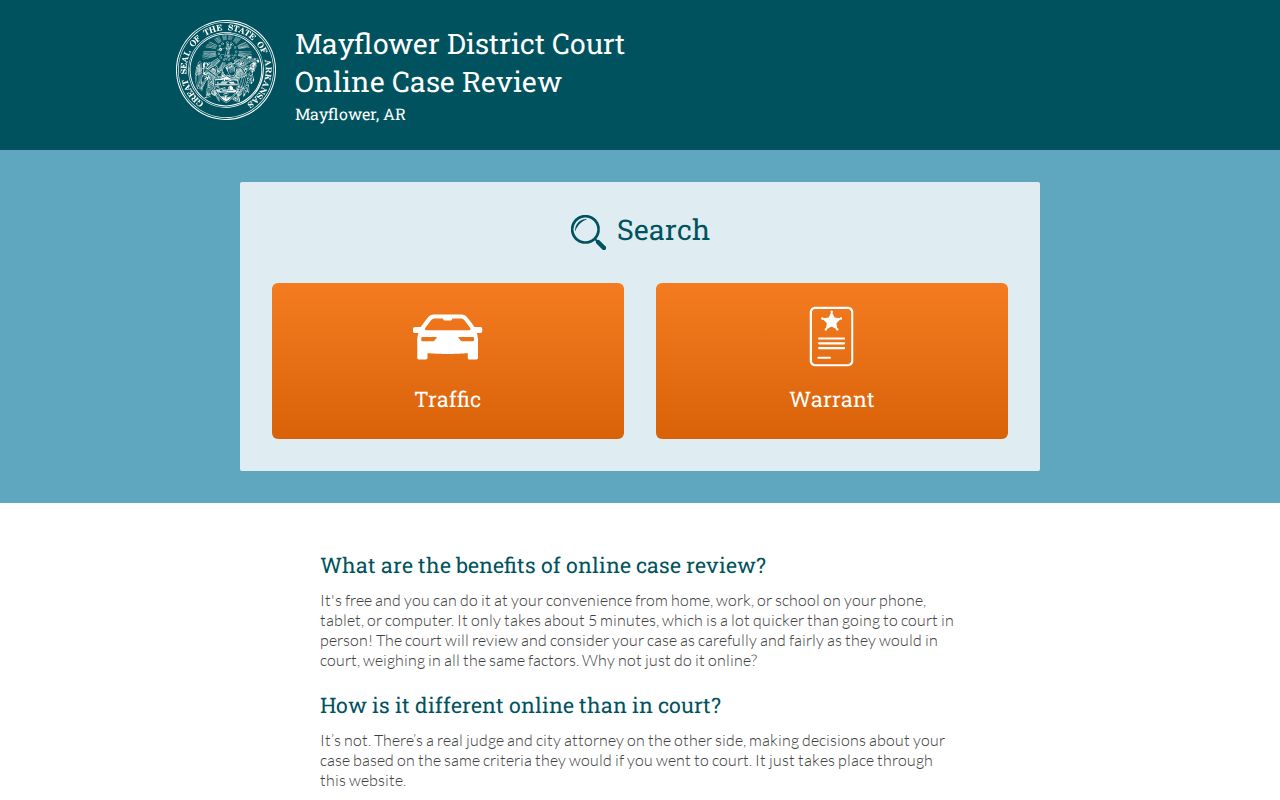
This Mayflower court-service tool is separate from the FCSO public list, and you should never enter or publish another person's private identifiers.
Policing and Courts in Mayflower
Mayflower City Center at 5 Ashmore Drive puts District Court, Police, and the Mayor's Office under one roof. The shared address is handy. The roles stay distinct, though. District Court controls its own docket and orders, police can answer Mayflower agency questions, and FCSO handles county execution along with detention routing.
Mayflower District Court
Monday through Friday, 8:00 a.m. to 4:30 p.m. Monthly sessions usually begin at 8:30 a.m.; verify the date.
501-470-0948
Mayflower Police Department
Publishes around-the-clock coverage and a direct warrant-question route in its FAQ.
501-470-1000
Mayflower City Center Warrant Routing
The Mayflower District Court page names City Center as the local court location, posts its hours, lists judges Chris Carnahan and David Hogue, and explains the monthly docket pattern. The court's jurisdiction covers misdemeanor, traffic, and preliminary-felony matters. View the contact and payment details on the official Mayflower District Court page:
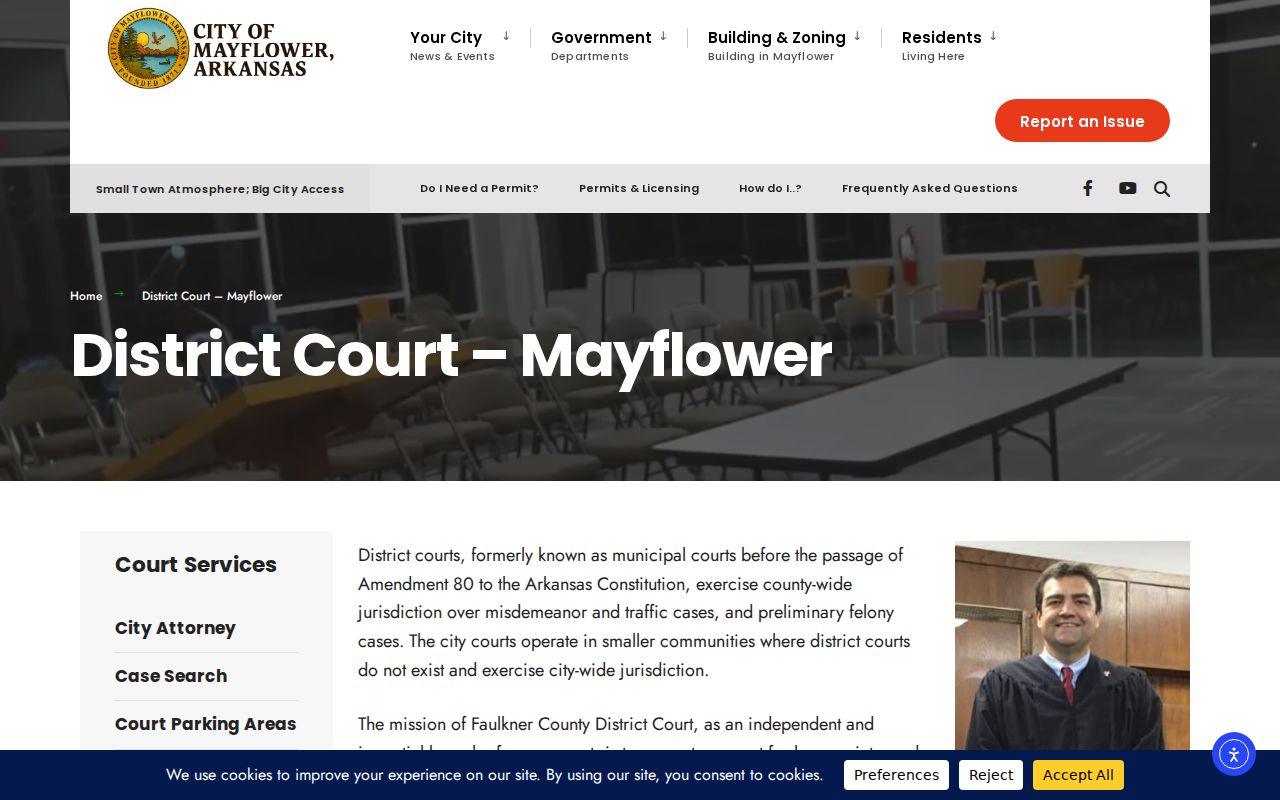
Sharing one building does not let the police desk fix every Mayflower warrant. Ask which office controls the act you need.
Warrants in Mayflower: Main Types
Only the court file tells you whether a Mayflower matter is a traffic warrant, bench process, or arrest authority.
| Type | How it arises | First route |
|---|---|---|
| Traffic warrant | Missed traffic date or unpaid obligation | District Court or traffic tab |
| FTA or capias | Missed appearance or unfiled required paperwork | District Court |
| Misdemeanor warrant | Lower-court criminal process | Court and Mayflower Police |
| Arrest warrant | Probable-cause or other lawful arrest authority | Issuing court and serving agency |
Capias is process that requires custody or an appearance, so confirm the exact term and status with the issuing court in Mayflower.
Mayflower Time-Pay FTA Warning
The official courtroom rules warn people not to leave without turning in a Time Pay Agreement sheet, because an FTA warrant may issue. That is a concrete example of paperwork carrying its own duty even after you speak with court staff. Read the warning in the official Mayflower courtroom instructions:
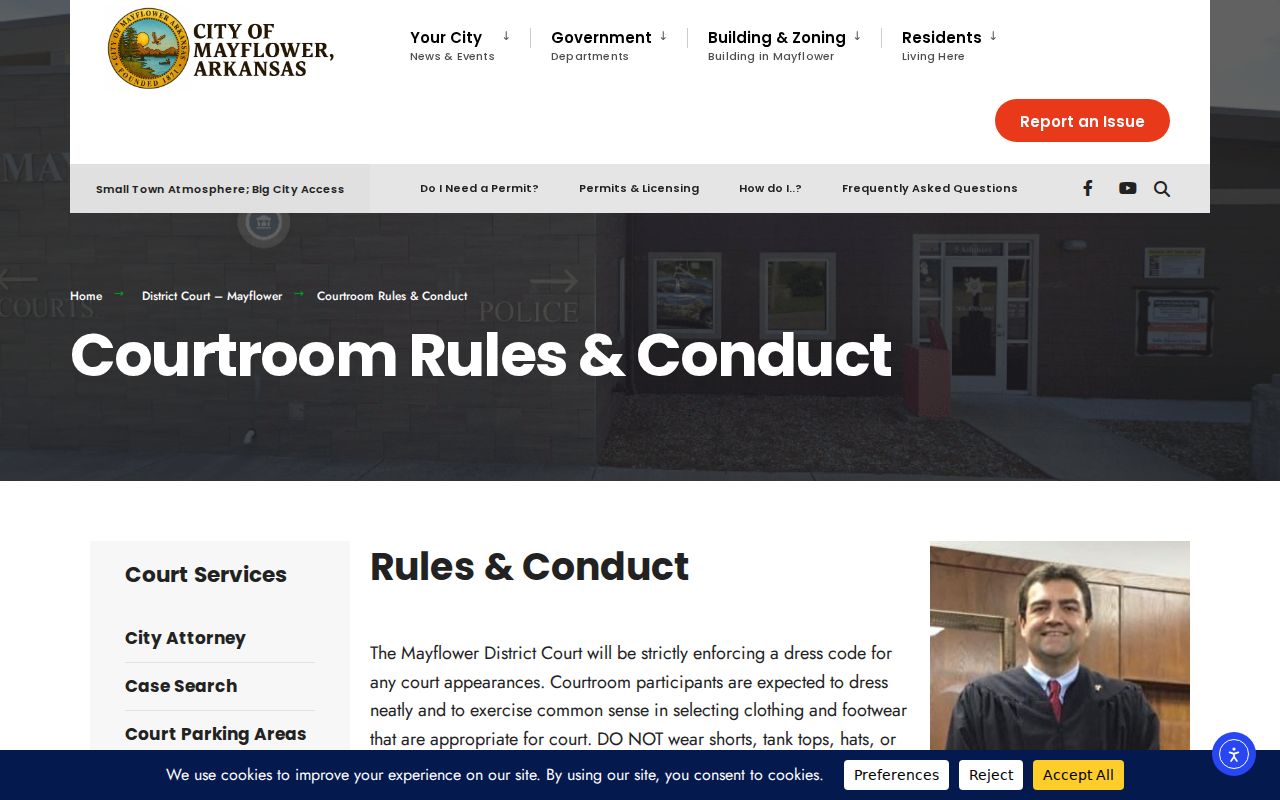
If the sheet got missed, call the Mayflower court and ask whether process issued and what filing, appearance, payment, or order is now required.
Mayflower Warrant Records: What They Show
The Mayflower tool asks for identifiers, but the court and sheriff records behind it may show different facts.
| Case number | A court file key, such as MAY-2025-0123; this sample is illustrative only. |
|---|---|
| Name and DOB | Search and matching data, subject to privacy rules. |
| Charge or status | An allegation or process label, not guilt. |
| Issuing court | The office that controls appearance and recall. |
| Bond or balance | Different obligations that require live confirmation. |
| Service or disposition | Later events that may show whether process ended. |
No single public row is guaranteed to carry every field needed to authenticate a Mayflower warrant.
Mayflower Window Takes No Cards
The Mayflower court window takes cash, check, or money order only. It states plainly that no credit or debit cards are accepted there. Online payment still works, so online cards say nothing about the counter.
Check payment consequences. The state portal warns that payment can waive appearance and trial and be treated as guilty or no contest.
Ask whether the Mayflower case needs a hearing, whether payment can resolve it, and whether a separate recall order must post. Keep the receipt and any court order.
Mayflower Police Confirms Local Warrants
The Mayflower Police page places the department at City Center, and the police FAQ answers the warrant question directly. It tells readers to check Arkansas Judiciary Case Search or call the Warrants Department at 501-470-1000. Note the limit: that confirmation covers Mayflower Police warrants only. View the department contact on the official Mayflower Police page:
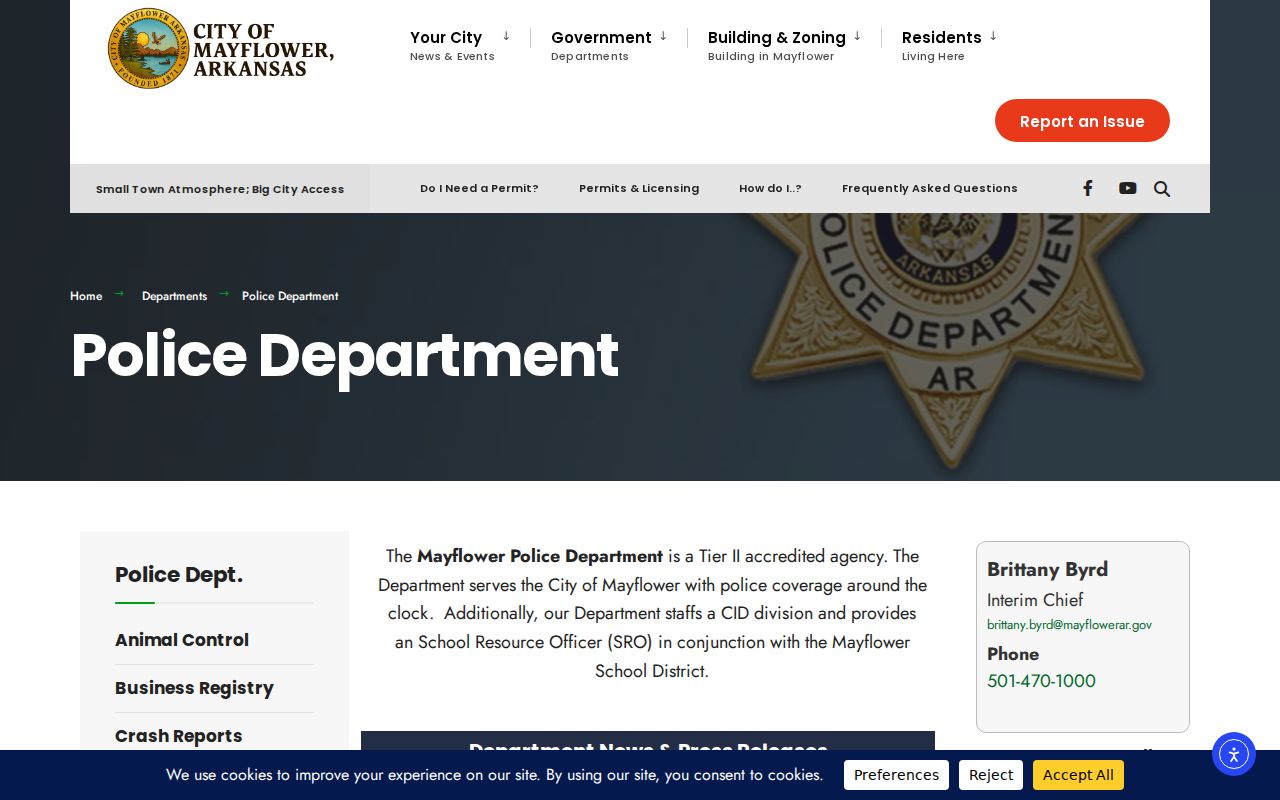
A county or other-city case still needs the sheriff or the issuing court, since one police response cannot certify all jurisdictions.
Mayflower Warrants and Faulkner County
Mayflower District Court and Police handle the local part. FCSO publishes the county list and confirms county service, booking, bond, and detention. Circuit-level records run through the Faulkner County Circuit Clerk. For those broader paths, use the Faulkner County warrant records overview.
Warrant flow: Mayflower court or police › Faulkner County Sheriff › issuing court confirmation.
Mayflower Census Context Is Limited
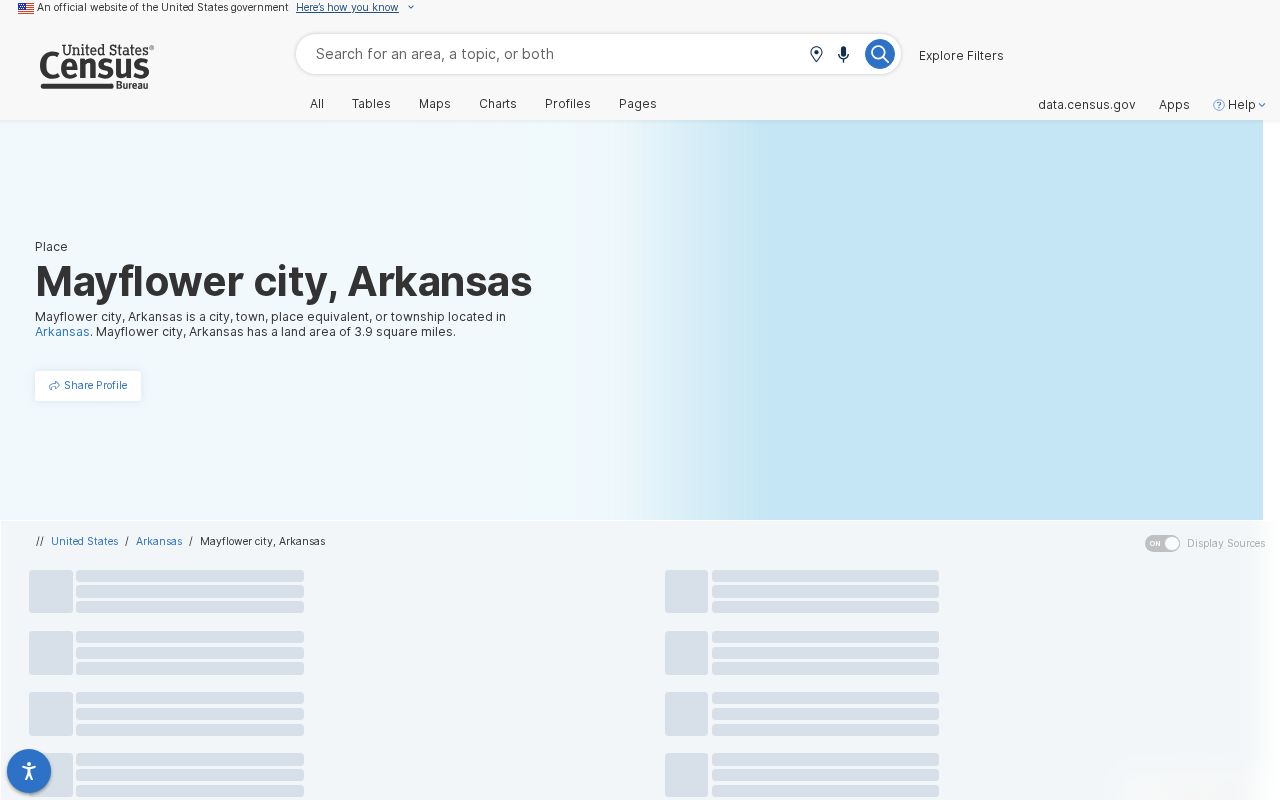
Mayflower counted 1,984 residents in the 2020 Census and ranks fourth in the selected city order. That figure explains why Mayflower has a city page at all. It does not pick the issuing court or prove a warrant is local. The official Census profile supports the population figure:
Use the case number, notice, or law-enforcement confirmation to route a case.
Mayflower Monthly Warrant Docket Timing
Mayflower District Court sits in monthly sessions, and most begin at 8:30 a.m. Call 501-470-0948 to verify the exact date. Timing turns urgent after a missed setting. A missed date in Mayflower makes every next step time sensitive. Do not pick another session on your own. The judge sets any new date, not the calendar. Ask the clerk three things. Did the judge reset the appearance? Can a filing be accepted first? Has failure-to-appear process already issued? A new calendar entry should come from the court, never from an assumption based on last month. Mayflower police coverage runs around the clock at 501-470-1000, but that coverage does not open the courtroom at any hour. Confirm current court hours by phone. Use 911 only for an emergency, never for a records question. The Mayflower online case tool works through separate tabs. The warrant tab takes birth date, license details, or case number. The Search Traffic tab asks for license number, state, and birth date. A clear result on one tab guarantees nothing about the other. Use the case type printed on your original Mayflower notice. A monthly pattern still does not let a person treat any session as a replacement appearance.
The Mayflower Police FAQ has one narrow use. It confirms Mayflower Police warrants only. It cannot certify Conway, Greenbrier, Vilonia, circuit, federal, or out-of-county matters, which belong to their own court and agency. Search ARCourts may identify which court holds the case. FCSO can confirm county execution and booking. Mayflower Police lists investigations and school resource functions, but neither expands the public warrant channel. When the Mayflower warrant tab returns nothing, check your identifiers, then call. A blank result can reflect timing, restriction, another court, or a record not indexed there. A match deserves a closer look. Note the case number. Confirm current status with the clerk, since a public result may omit sealed, juvenile, restricted, or recent filings. Write down which Mayflower source supplied each fact, and call the court if the city interface and Search ARCourts disagree.
Call FCSO before you travel if bond is possible in a Mayflower matter. Ask which detention unit handles booking and what form of bond it accepts. No universal amount is published. Judges generally set amounts, while the sheriff handles sufficiency and logistics. FCSO describes three routes: cash, licensed surety, and own-recognizance release. Cash means the full amount. A surety charges a nonrefundable fee, and officers cannot recommend a company. Own-recognizance release is a promise to appear and is uncommon outside very minor matters. Online payment is not bond. Payment may resolve a balance under plea terms, while bond secures appearance. A judge may still need to recall the warrant, so ask what order ends the process. After a hearing or payment in Mayflower, ask whether recall is a separate step. Keep the receipt, the Time Pay Agreement, and the filed order. Then check with FCSO whether the warrant reached county execution. Handle any update delay through confirmation. At the Mayflower payment window, cash, check, or money order work and cards do not. Online payment is separate. Never act on an unsolicited call about a Mayflower warrant; verify with published local numbers. The Mayflower courtroom rules add security and conduct directions tied to the Time Pay Agreement, and staff may need that sheet before someone leaves. If it was lost or filed late, call the clerk and ask what the docket shows now.
Accessing Mayflower Warrant Records
In Mayflower, the court, police, sheriff, and Circuit Clerk each hold different warrant records. Public access still carries exceptions for sealed, juvenile, restricted, and protected data.
Key rules:
Arkansas Freedom of Information Act generally opens public records held by the proper custodian, subject to exceptions.
Administrative Order 19 governs public court data and nonpublic information.
Ark. Code §9-27-309 protects juvenile records under its terms.
Use a public result as a lead. Obtain live confirmation before taking action.